
























Ambulatory surgical billing requires more than accurate coding — it demands disciplined processes, regulatory awareness, and continuous oversight across the revenue cycle. For ambulatory surgery centers (ASCs), compliance is not a single checkpoint but an operational responsibility that affects documentation, claims submission, denial management, and financial performance.
Even minor coding or documentation errors can disrupt cash flow, trigger denials, or increase audit exposure. As Centers for Medicare & Medicaid Services (CMS) rules and commercial payer policies continue to evolve, ASCs must ensure their billing workflows, staff training, and internal controls keep pace.
Compliance failures expose ASCs to financial and operational risk. The sections below outline common challenges and practical strategies to strengthen billing processes.
Core Components of Ambulatory Surgical Billing
Effective ambulatory surgical billing requires oversight across interconnected stages of the revenue cycle, including:
-
Pre-service eligibility and authorization
-
CPT and HCPCS coding accuracy
-
Modifier compliance and adherence to National Correct Coding Initiative (NCCI) edits
-
Documentation integrity
-
Claims submission and adjudication
-
Denial management and appeals
-
Audit readiness and ongoing monitoring
Each component directly influences reimbursement accuracy, compliance exposure, and ASC revenue cycle performance.
Why Is Compliance Critical in Ambulatory Surgical Billing?
Compliance is foundational to ASC revenue cycle performance. An ASC revenue cycle workflow with strict documentation standards and procedures helps reduce risk and ensure timely, accurate payments.
Failure to comply with billing regulations can result in civil and even criminal penalties. For example, violating the No Surprises Act, which establishes rules and requirements to protect patients from “surprise” or unfair medical billing, may result in civil monetary penalties of up to $10,000, according to the American Medical Association (AMA).
Medical coding mistakes resulting from failure to adhere to Medicare NCCI Edits can result in steep fines or exclusion from Medicare programs.
HIPAA violations, including improper disclosure or disposal of protected health information (PHI), can incur civil penalties ranging from $100 to $50,000 per violation and criminal penalties of up to 10 years of imprisonment, according to the AMA.
Penalties aren’t the only concern for surgery centers. Inefficient, disorganized, and improper documentation can lead to audits, delayed payments, denied claims, takebacks, and other negative consequences.
However, when ambulatory surgical billing compliance is prioritized, streamlined, and strengthened, it can transform revenue cycle management into a structured, performance-driven process that improves clean-claim rates, reduces denials, and strengthens overall revenue cycle stability.
What Are the Most Common Challenges in Ambulatory Surgical Billing?
Improving ASC revenue cycle compliance begins with understanding the most common billing challenges. These include the following:
-
Coding difficulties. Medical coding rules can vary by payer. Common mix-ups, such as unbundling CPT codes, improperly using modifier -59 or -X modifiers, and failing to account for procedure-to-procedure edits under the NCCI, frequently trigger denials.
-
Evolving legal requirements. The regulatory landscape is constantly changing, with new coding and billing rules introduced regularly. Staying current on federal and state changes may require ongoing process adjustments to maintain compliance.
-
Payer complexities and denials. Commercial payer policies often differ in prior authorization requirements, bundling interpretations, and reimbursement methodologies under the CMS ASC fee schedule.
-
Patient-facing problems. During registration, patients must provide documentation such as financial consent, advance beneficiary notices, and HIPAA privacy acknowledgments. Missing information can delay collection and create patient confusion.
-
Internal challenges. Ensuring in-house ambulatory surgical billing compliance requires employing staff with the knowledge and expertise to complete all steps of the revenue cycle management process. However, internal challenges, like staff shortages, turnover, and burnout, can make it difficult to find and retain the right staff to ensure ongoing compliance.
-
ASC revenue cycle inefficiency. Some ASCs rely on paper or legacy systems despite more efficient solutions being available. Although change can be difficult, modern systems introduce greater agility and support evolving compliance requirements.
-
Poor return on investment. Tightening reimbursement and rising costs make sustaining case profitability increasingly difficult. An ASC revenue cycle plagued by inefficient processes that stall workflows and lead to compliance issues make it difficult to collect proper payment promptly, especially when services are not coded and billed accurately and correctly. Improving return on investment requires streamlining ambulatory surgical billing processes.
Understanding these challenges helps inform a stronger compliance strategy.
What Best Practices Support ASC Billing Compliance?
Strengthening ambulatory surgical billing compliance begins with clear governance and documented best practices.
Clearly define who is responsible for compliance and document their specific responsibilities. Those with in-house coding and billing must define these team members' role in compliance, develop internal processes, and deliver training to these staff members on rules and requirements. This will help ensure compliance throughout the ASC revenue cycle.
ASCs must also identify all regulations affecting their revenue cycle. This includes understanding government regulations, commercial payer guidelines and expectations, and coding rules. Staff must be trained on these standards, and time should be set aside to review best practices and compliance processes on a regular basis.
Compliance requirements are ever-changing, so one or more individuals within your surgery center must be responsible for staying current with these changes. For example, CMS publishes annual updates to the ASC payment system, including changes to payment rates, covered procedure lists, device-intensive procedures, and payment indicator classifications. Monitoring relevant websites, publications, and news announcements can help your ASC stay current with evolving rules.
Detailed documentation is essential. Set up processes to capture relevant patient information, procedure details, and anything else that will be needed to comply with coding, billing, and collections rules. Review these documentation requirements and workflow processes regularly to ensure that staff knows what they need to collect and document, that coders and billers have everything they require to submit clean claims, and that all changes which occur — whether related to payer guidelines, federal guidelines, codes, or procedures and specialties — are updated and captured accurately.
Maintaining compliance requires ongoing effort. Consistently getting it right takes time, practice, effort, and routine reviews. Foster a no-blame culture. If someone on your staff sees or does something wrong, don’t necessarily punish the offending individual. Instead, see if you can fix the error and train staff to ensure the mistake is not repeated. Staff members are already under pressure to remember complex guidelines while managing their regular responsibilities, so encouraging them with positive reinforcement will help them embrace accountability and course-correct without fear of retribution.
How Can ASCs Strengthen Revenue Cycle Performance?
Staying current with regulatory requirements is only part of the solution. Here are some strategies for maintaining and improving ambulatory surgical billing compliance.
-
Collaborate with and challenge staff. As mentioned, establishing a no-blame culture can help create a more collaborative atmosphere around compliance. In addition to training and educating staff, ask them for recommendations for improvement that can ease the burden of achieving compliance. Also, challenge staff to improve by implementing new goals and rewarding success.
-
Outsource revenue cycle management. Evaluate what makes the most financial and operational sense for your ASC. Handling billing in-house remains an option, but allocating resources appropriately may be difficult, and finding staff with the expertise and experience needed to support your ASC's surgeons, specialties, and procedures — all of which are likely to change over time — may be difficult. Outsourcing may be the better choice for improving performance. Third-party revenue cycle services can handle all responsibilities for your ASC, or you can outsource specific portions of revenue cycle management, such as coding.
-
Leverage monitoring and auditing tools. Ongoing compliance monitoring is key to ensuring accurate performance and identifying revenue cycle gaps leading to billing and collections problems. Conducting both internal and external audits is also essential to improve coding and billing accuracy and performance. Monitoring and auditing tools can deliver actionable insights that help flag and detect issues, discover root causes of problems, measure staff performance, and identify areas of opportunities to enhance compliance.
-
Invest in modern solutions. The right ASC software can simplify billing and revenue cycle management, including streamlining registration, supporting clean-claim rates, tracking claims adjudication timelines, analyzing denial trends, and strengthening audit readiness. Legacy technology, piecemeal solutions, and paper-based processes can slow operations and introduce easily avoidable issues. Modern solutions can improve usability while strengthening revenue cycle compliance. Select solutions aligned with both short- and long-term operational goals.
Enhancing Your ASC Revenue Cycle Performance
While ambulatory surgical billing involves layered regulatory requirements, payer-specific reimbursement rules, and detailed coding standards, modern revenue cycle services and software solutions can ease the burden. Optimizing your ASC revenue cycle processes can improve cash flow predictability, accelerate reimbursement timelines, and reduce compliance exposure, while allowing your team to focus on delivering high-quality outpatient care.
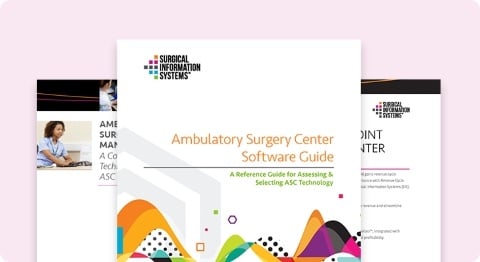
Looking to learn more about ASC revenue cycle management? Download this detailed guide written for surgery centers.
Frequently Asked Questions About Ambulatory Surgical Billing
How does ambulatory surgical billing differ from hospital outpatient billing?
Ambulatory surgical billing follows the Centers for Medicare & Medicaid Services (CMS) Ambulatory Surgical Center (ASC) payment system, which differs from hospital outpatient reimbursement methodologies. ASC reimbursement is heavily influenced by procedure classification, payment indicators, and adherence to National Correct Coding Initiative (NCCI) edits. Unlike hospital outpatient departments, ASCs operate under distinct fee schedule structures and bundling rules that directly affect reimbursement accuracy.
What are the most common causes of claim denials in ambulatory surgical billing?
Common causes of denials include improper modifier usage (such as incorrect application of modifier -59 or related -X modifiers), unbundled CPT codes, failure to comply with NCCI edits, incomplete documentation, and payer-specific prior authorization requirements. Variations in commercial payer policies also contribute to denial risk. Consistent coding oversight and documentation integrity are essential to maintaining clean-claim rates.
Why is compliance critical in ASC revenue cycle management?
Compliance in ambulatory surgical billing reduces audit exposure, prevents civil monetary penalties, and minimizes payment delays or recoupments. Regulatory requirements under CMS, HIPAA, and the No Surprises Act create financial and operational risk if not properly managed. Strong compliance oversight supports reimbursement accuracy and revenue cycle stability.
How can ASCs improve ambulatory surgical billing performance?
ASCs can improve performance by strengthening internal controls, investing in staff training, conducting regular coding audits, and leveraging monitoring tools that track denial trends and claims adjudication timelines. Some centers also consider outsourcing revenue cycle management functions to improve operational efficiency and reduce compliance risk.
When should an ASC consider outsourcing revenue cycle management?
Outsourcing may be appropriate when internal staffing limitations, turnover, or specialty complexity make it difficult to maintain consistent coding accuracy and compliance oversight. Third-party revenue cycle partners can provide expertise in ASC-specific reimbursement rules, denial management, and regulatory monitoring. The decision should align with financial goals and operational capacity.